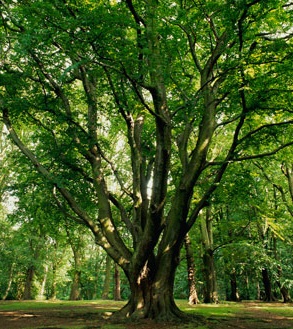
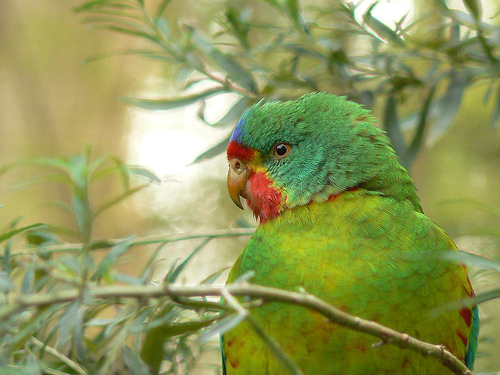
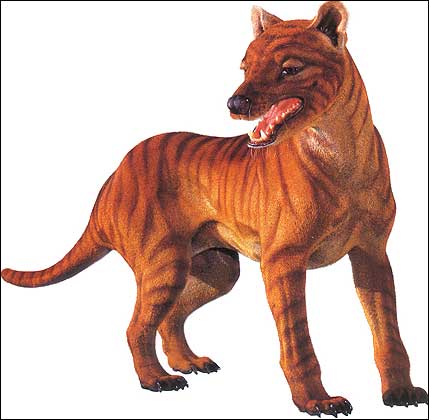
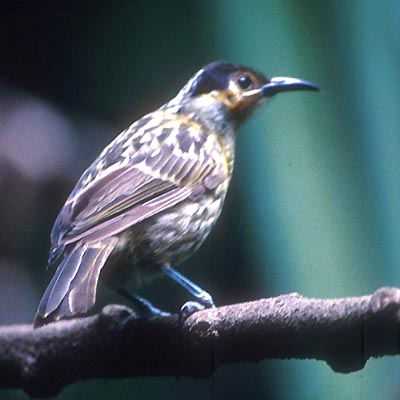
 The wettest areas have temperate rainforests, largely of beech or myrtle; areas having 30 to 60 inches of rainfall annually support good-quality eucalypt forests, and the drier areas carry poor-quality eucalypt forests or savanna woodland. Rainforests would be more widespread in the absence of fires, most of which are caused by natural forces. Animal life is virtually absent from the ture rainforests but abounds in the extensive eucalypt forests. Birds include honey eaters, masked jays, plovers, black magpies, black cockatoos, and various parrots. Among the mammals are wallabies, brushtail and ringtail possums, and marsupial carnivores. The various native cats include the spotted- tailed and eastern quoll, and the Tasmanian devil. The thylacine became extinct in the 1930s. 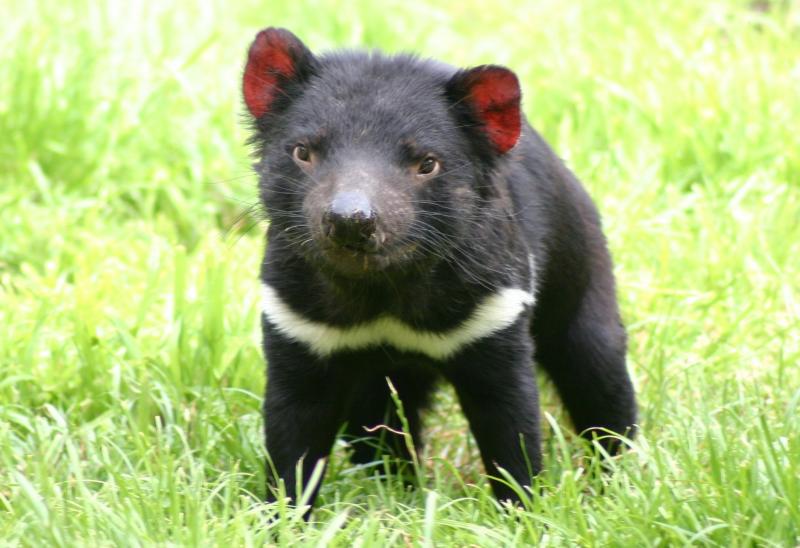 |
     |
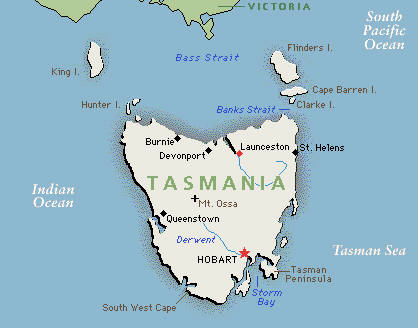
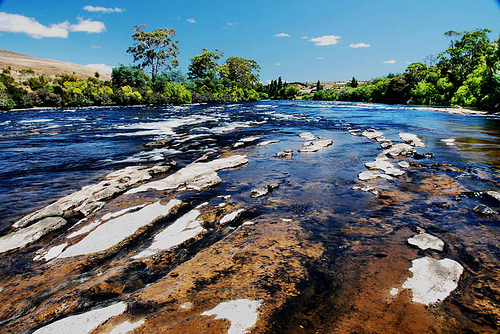 There are two major river systems in Tasmania, the Derwent in the southeast and the South Esk in the northeast. Most Tasmanian soild are leached, acidic, poorly drained, high in humus, and low in fertility. Other fertile soils are those of former swamps in the far northwest and the Bass Straight Islands. Tasmania, located in the midlatitude westerly wind belt and dominated by southern maritime air masses, generaly enjoys a moist, equable climate, with mild to warm summers, mild winters in most settled areas and rain during all seasons. The southwest has much rugged weather, and the southeast can suffer drought. 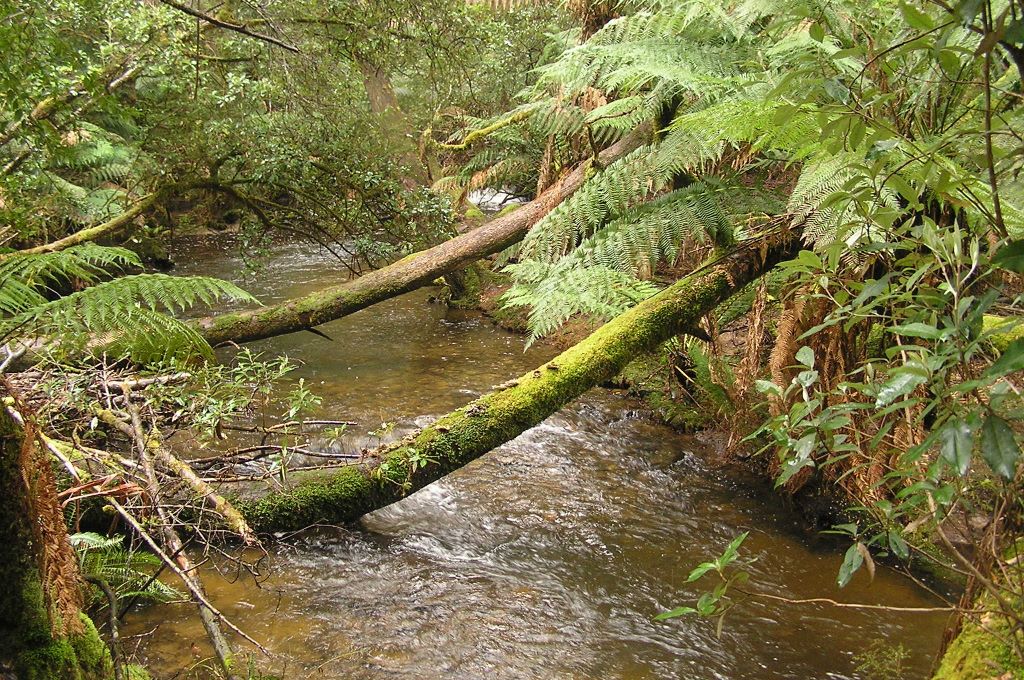 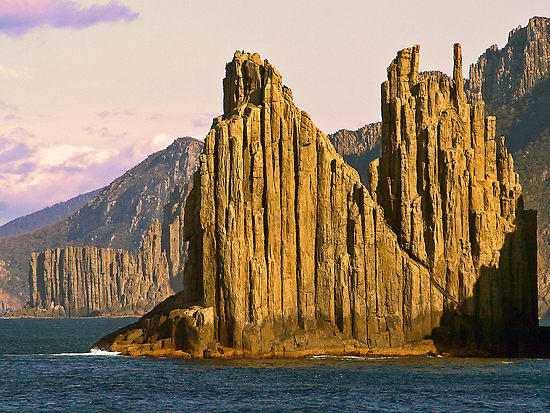 |
||
 |
||||
