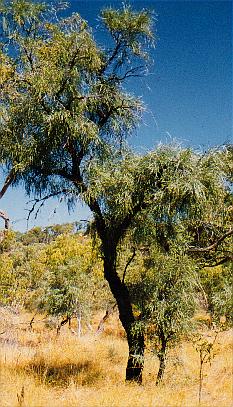
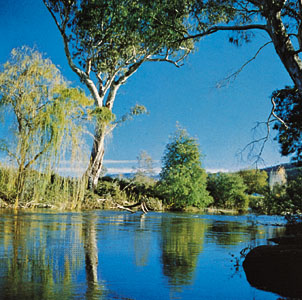
- Vegetation in the vast arid areas ranges from low woodlands of acacia species, cypress pines, and beefwood, through shrub savannas dominated by acacia, to low shrublands of bluebush and saltbush that provide the basis for inland sheep and cattle grazing.
- South Australia shares many animal, bird and reptile species with adjacent parts of Australia.
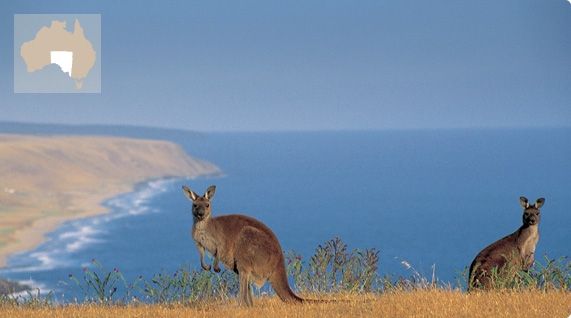
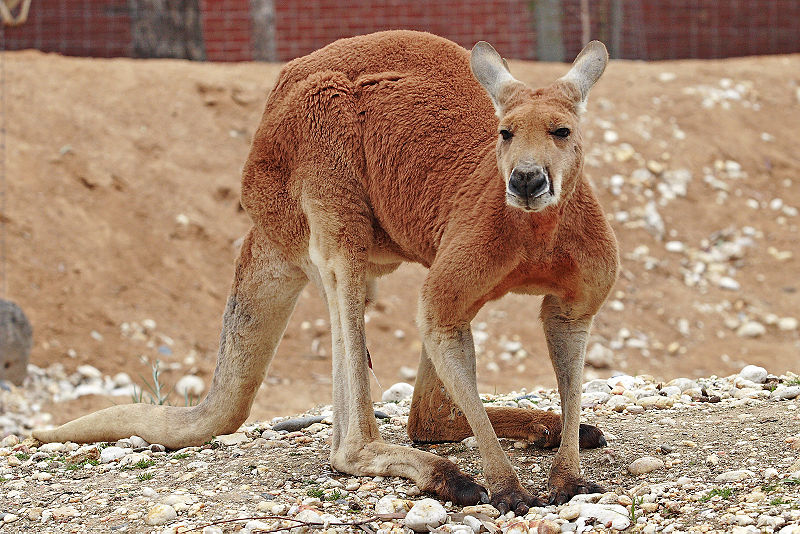
- More than 1/4 of the some 50 species of marsupials orginally native to the state are now extinct, but others are still common, including western gray kangaroos, red kangaroos, and brushed tail possums.
- Hundreds of species of birds inhabit or visit South Australia.
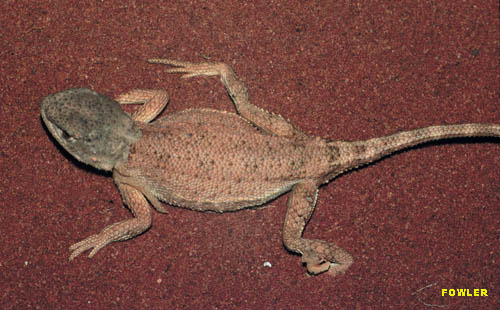
- The state is home to more than 200 species of reptiles and amphibians.
- The gibber dragon, a type of lizard, and the Woomera slider, a variety of skink, are among several species of reptiles that are endemic to the state.